

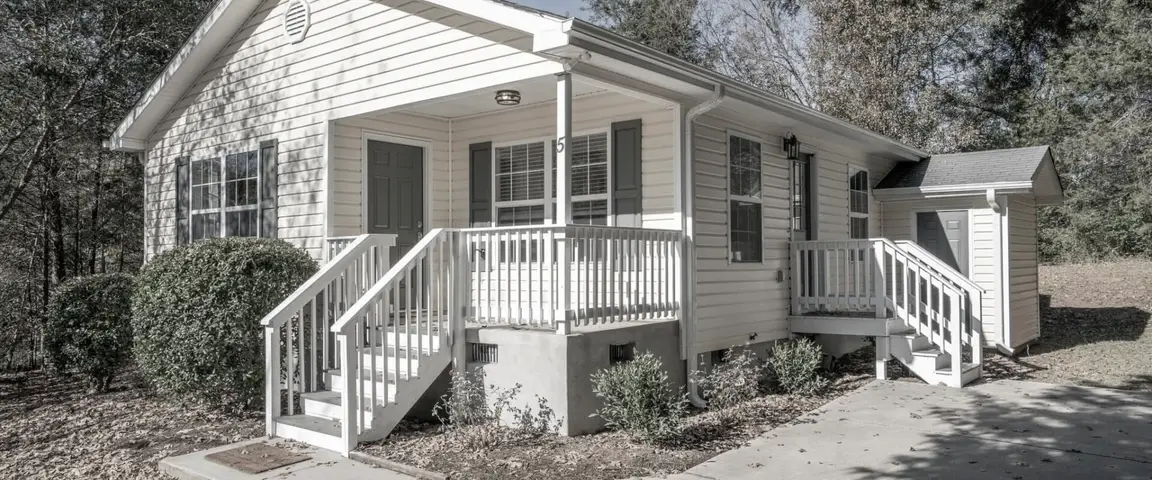

A Greenville house with a leaking roof, uneven floors, aging electrical wiring, or several years of deferred maintenance can still be sold. The harder question is whether repairing it first would leave you with more money after the sale.
You have three main options: repair and list the property, list it in its existing condition, or request an offer from a direct home buyer. Each has different costs, financing considerations, and uncertainties. We compare the options using Greenville rules, South Carolina disclosures, and realistic numbers.
If you want to explore a purchase without taking on the renovation yourself, GSP Investors LLC considers houses needing significant repairs throughout Upstate South Carolina.
Can You Sell a House That Needs Major Repairs in Greenville, SC?
Yes. You can sell a Greenville property that needs major repairs without completing every improvement first. The condition influences the likely price, available buyers, financing, and contract terms; it does not automatically make the property unsellable.
A homeowner with savings may renovate; an out-of-state heir may prefer an as-is sale.
Before making that decision, establish four numbers: the property’s likely renovated value, its current as-is value, a documented repair budget, and the costs of keeping it until closing. The Greenville home-selling service page explains the direct-buying alternative; the analysis below focuses on whether that alternative makes financial sense.
Which Repairs Matter Most to Greenville Buyers?
Structural and foundation concerns. Sloping floors, substantial wall movement, or foundation cracks can raise questions about stability. Not every crack is serious. A structural engineer’s opinion may be more useful than immediately paying a contractor to conceal the symptoms.
Roof and water intrusion. An aging roof is different from widespread leaks affecting sheathing, insulation, and ceilings. Ask whether a targeted repair will solve the problem or whether underlying materials need replacement. Photograph affected areas before they are covered.
Electrical, plumbing, and HVAC defects. Unsafe wiring, recurring plumbing failures, or inoperative heating and cooling can affect buyer confidence and certain mortgage decisions. Estimates should identify the failed components rather than automatically recommending complete replacement of every system.
Moisture and deferred maintenance. Drainage problems, deteriorated flooring, rotted trim, and long-neglected repairs often overlap. A cosmetic refresh won’t solve a persistent moisture source, and repairing one system may expose damage behind walls.
Separate each problem into three groups: urgent safety work, repairs likely to affect financing or insurance, and optional cosmetic improvements.
One overlooked distinction is whether damage is active or historical. A stain beneath a previously repaired roof is different from an ongoing leak, and a foundation repaired with engineering documentation differs from unexplained movement. Keep repair dates, invoices, warranties, and follow-up reports together. If you do not understand a defect, consult a qualified professional rather than guessing at its severity. Clear documentation can make an as-is property easier for buyers to evaluate without implying that an old problem has disappeared.
Should You Fix the House Before Selling?
Repairing before selling can be worthwhile when the projected increase in net proceeds comfortably exceeds renovation expenses and the work is manageable. It is less attractive when estimates are uncertain, contractors are unavailable, or the owner must borrow heavily to fund improvements.
Consider a house that needs both a roof replacement and new kitchen cabinets. The roof may affect water intrusion and buyer financing; the cabinets may only change appearance. Spending on cabinets before addressing the roof is unlikely to resolve the principal obstacle to selling.
Ask a Greenville agent to estimate both renovated and as-is prices using genuinely comparable properties. Then obtain written contractor estimates. Account for hidden damage and delays.
The goal is not the highest theoretical sale price; it is a defensible net result.
Three Ways to Sell a House That Needs Major Repairs in Greenville
1. Renovate and List With a Real Estate Agent
This approach may produce the highest gross price if the work is well chosen and the finished home meets buyer expectations.
The trade-offs are upfront cash, contractor coordination, potential permits, additional ownership expenses, and exposure to market changes. Agent compensation and seller-paid closing expenses are negotiable rather than fixed percentages.
A renovation is most sensible when your written estimates are reliable, you have a reserve for surprises, and projected net proceeds show a meaningful advantage.
2. List the Property As-Is
An as-is listing can reach renovation-minded buyers without requiring you to complete major work. The agent can market the property’s existing condition and provide exposure to purchasers who understand repair costs.
However, “as-is” does not automatically eliminate inspections or contingencies. A buyer may still ask for price changes or terminate under an applicable contract provision. If the home’s condition conflicts with the lender’s requirements, a financed transaction may also become difficult.
Budget for showings, negotiations, and closing delays. For more detail, see the site’s guide to selling without a Realtor in Upstate.
3. Sell Directly to a Cash Home Buyer
A direct buyer may evaluate the property with its problems intact and make an offer that reflects expected repairs, holding expenses, resale costs, and risk. This can remove the need for the seller to organize a major renovation or repeatedly prepare the property for showings.
The trade-off is price. A cash investor generally needs room in the deal to cover the work and earn a return, so the offer may be below what a fully repaired home could sell for. Review the written purchase agreement carefully, including contingencies, proof of funds, closing expenses, and the proposed date.
GSP Investors explains its approach on its How It Works and selling-options comparison pages.
What If the House Doesn’t Qualify for Traditional Buyer Financing?
Serious defects may complicate mortgage approval when the lender or loan program requires a property to meet particular safety, soundness, or habitability conditions. Examples can include an unsafe electrical system, substantial structural concerns, or an inoperative essential system. Not every fixer-upper fails mortgage requirements, and standards differ by lender and loan type.
Ask the buyer’s lender which specific condition is a concern. Sometimes an agreed repair resolves it; sometimes a different financing product is possible. Some renovation loans are available, subject to separate requirements.
If financing is the main obstacle, comparing a properly qualified renovation buyer with a verified cash purchaser is more useful than assuming every buyer will reject the house. Do not promise that a cash transaction removes title searches, inspections, or all closing risks.
Greenville Permits: Check the Jurisdiction Before Spending on Repairs
A mailing address that says Greenville does not necessarily place a house inside Greenville city limits. The responsible permitting office can differ between a property within the city and one in unincorporated Greenville County.
For city properties, consult the City of Greenville’s permit guidance. For county properties, use the Greenville County Building Safety permitting information. Structural alterations and many electrical, plumbing, gas, and mechanical projects may require permits or inspections; requirements depend on the actual scope.
Before approving work, ask the contractor which permits are needed, who will obtain them, and what documentation will be available at closing. If a seller inherited a property with work completed years ago, missing permits may deserve professional review.
Some exterior alterations in regulated districts may need additional local review.
South Carolina Disclosures Still Matter in an As-Is Sale
South Carolina’s Residential Property Condition Disclosure Act generally requires covered residential sellers to provide the prescribed disclosure statement before entering a contract. The law includes exemptions, including certain estate-related transfers and situations where both parties agree in writing not to complete the statement.
The form addresses matters such as structural components, water intrusion, mechanical systems, and other specified conditions. An as-is term does not provide blanket protection for false statements or deliberate concealment. Sellers should answer applicable questions accurately and obtain legal guidance when the transaction’s exemption status is uncertain.
For most houses built before 1978, additional federal lead-based paint disclosure rules may apply. The EPA’s real estate disclosure guidance explains the information and records sellers may need to provide. Selling to an investor does not automatically remove these requirements.
Keep inspection reports, receipts, and permits available for buyer review.
How to Estimate Repair Costs Without Starting a Renovation
Begin with estimates for the expensive problems most likely to affect the property’s value: roofing, structure, electrical work, plumbing, HVAC, and moisture control.
For each item, ask the professional to identify the cause, recommended scope, assumptions, permit needs, and expected exclusions.
Get more than one estimate for particularly expensive or uncertain items, and check qualifications before committing money. South Carolina’s Department of Labor, Licensing and Regulation provides information on regulated professions and licensing.
Create separate totals for essential work, optional cosmetic updates, and contingency costs. If opening walls could expose additional problems, ask contractors how change orders would be handled.
Finally, include mortgage payments, taxes, insurance, utilities, yard care, and vacancy-related expenses while you wait. A renovation that takes longer than expected may cost more than the contractor invoices alone.
What Is a Greenville House Worth in Its Current Condition?
As-is value depends on comparable sales, location, layout, lot, observed defects, and the number of buyers able to purchase the property. The expected renovation cost matters, but subtracting repair estimates from a perfect-condition price is not a complete valuation method.
Compare recently sold properties with similar characteristics, not merely active asking prices. A local agent’s comparative market analysis and one or more written investor offers can provide different perspectives. The Greenville County real property search can help you check parcel information, but tax assessments are not a substitute for current market value.
Confirm whether a quoted offer could change after inspection.
Greenville Example: Renovate, List As-Is, or Sell Directly?
Imagine an older Greenville house with roof deterioration, electrical repairs, damaged flooring, and an HVAC system near failure. For this hypothetical example only, assume a repaired sale price of $325,000 and a renovation budget of $64,000. These numbers are not local market averages, actual estimates, or offers from GSP Investors.
| Estimated item | Renovate and list | List as-is | Direct cash sale |
|---|---|---|---|
| Sale price | $325,000 | $244,000 | $216,000 |
| Seller-funded repairs | $64,000 | $0 | $0 |
| Selling and closing expenses | $18,000 | $14,000 | $0* |
| Holding expenses | $6,000 | $4,000 | $1,500 |
| Estimated net before debt payoff | $237,000 | $226,000 | $214,500 |
Disclaimer: The financial figures above are hypothetical examples for illustration only, not actual Greenville market averages or guaranteed offers. Actual sale prices, repair costs, closing expenses, and net proceeds vary by property and transaction. Mortgage balances, liens, and applicable taxes may further reduce the amount received.
Renovating wins this illustration by $11,000 over an as-is listing, but the owner must fund $64,000 and manage the project. The as-is listing produces $11,500 more than the hypothetical direct sale while involving marketing, possible financing delays, and additional holding costs.
An owner already living elsewhere may place substantial value on ending insurance, utility, and maintenance expenses sooner. Someone still living comfortably in the home may prefer to test an as-is listing. The property is identical; the personal cost of waiting is not.
Neither the highest sale price nor the simplest transaction is automatically best. If the roof estimate increases, contractors run late, or market demand changes, the ranking could shift.
When Selling As-Is May Make More Sense Than Renovating
An as-is sale becomes more compelling when several practical constraints occur together: you cannot comfortably finance the work, the house is vacant far from where you live, contractor estimates vary widely, or you need a predictable next housing decision.
It can also be sensible when the expected added resale value is only slightly higher than repair and holding costs. That narrow margin leaves little room for surprises.
By contrast, renovating may be worthwhile when the main problems are limited, the home is otherwise marketable, and the projected return remains attractive after a conservative budget.
Make the decision from written numbers and your actual circumstances—not from the assumption that every repair raises resale value dollar for dollar.
What If an Inspection Reveals Additional Damage?
A buyer’s inspection may uncover defects that weren’t visible when the property was listed. Depending on the purchase agreement, the parties might negotiate repairs, a permitted credit, a price adjustment, or cancellation.
Before agreeing to expensive work, determine whether the requested repair is essential to financing or simply the buyer’s preference. If the contract falls through, new information about the property could also affect later disclosures.
Obtain priced estimates before accepting large repair demands.
What If Your Greenville House Is Inherited, Vacant, or Co-Owned?
An inherited house that needs repairs may also involve estate administration, authority to sign a contract, and ongoing property expenses. The Greenville inherited-house guide addresses those ownership decisions in more detail.
If siblings or other co-owners disagree, resolve who can authorize the sale before negotiating final terms. See the site’s multiple-owner selling guide.
For vacant homes, confirm insurance coverage, secure the property, and document maintenance. Owners planning an out-of-state move can review the relocation selling guide. If property taxes may be overdue, check the Greenville County tax search and request an up-to-date payoff through the appropriate office.
A Practical Checklist Before Selling a Greenville House That Needs Repairs
- Document the condition. Take dated photos and collect previous inspections, repair invoices, permits, and warranty records.
- Identify urgent hazards. Address immediate safety concerns appropriately, particularly if the home is occupied.
- Check ownership and debt. Confirm who can sign, the mortgage payoff, taxes, recorded liens, and other obligations.
- Get targeted estimates. Prioritize costly systems; distinguish required repairs from optional upgrades.
- Confirm jurisdiction. Ask the city or county whether permits or inspections are needed for proposed work.
- Compare two property values. Obtain a realistic as-is estimate and a supported renovated-price estimate.
- Calculate net proceeds. Include repair spending, agent compensation if applicable, closing expenses, and holding costs.
- Review actual contracts. Check financing, inspection rights, earnest money, title conditions, closing costs, and timing.
- Prepare disclosures. Determine applicable South Carolina and federal requirements before signing.
- Choose deliberately. Select the route that fits your budget, risk tolerance, and moving plans.
How GSP Investors LLC Evaluates Greenville Houses Needing Repairs
GSP Investors LLC buys houses directly throughout Upstate South Carolina, including properties with substantial repair needs. Instead of requiring you to renovate for retail buyers, the company evaluates the property’s condition and considers whether a direct purchase is workable.
You can request a no-obligation offer. If an offer is made, compare its net terms with an agent’s estimated as-is sale and any renovation proposal. Timing depends on the contract, title work, and your circumstances; a rapid closing should not be treated as guaranteed.
Learn about the GSP Investors team, read homeowner reviews, or visit the frequently asked questions page before deciding.
Frequently Asked Questions About Selling a House That Needs Major Repairs in Greenville, SC
1. Can I sell my Greenville house without making major repairs?
Yes. You can list your Greenville house as-is or sell directly to a buyer willing to purchase it in its current condition. The repair needs may affect the offer.
2. Is it better to repair a house or sell it as-is?
Compare the expected net proceeds from both options. Repairing may increase the selling price, but an as-is sale can avoid renovation expenses, delays, and unexpected costs.
3. Will cash buyers purchase houses with foundation problems?
Some cash buyers purchase homes with foundation damage. The severity of the problem, estimated repair costs, and property’s value will influence the offer.
4. Can I sell a house with a damaged roof or outdated electrical system?
Yes. However, significant roof or electrical problems may affect financing, insurance, buyer interest, and the sale price.
5. Do I have to disclose major repairs when selling as-is in South Carolina?
Applicable South Carolina property disclosure requirements still matter in an as-is sale. Certain transactions are exempt, but sellers must not misrepresent known property conditions.
6. What if my Greenville house doesn’t qualify for traditional mortgage financing?
You can explore qualified renovation-loan buyers, negotiate necessary repairs, or consider a cash buyer. Available options depend on the property’s condition and contract terms.
7. Can I sell an inherited house that needs expensive repairs?
Yes. An inherited property can generally be sold as-is once the appropriate owner or estate representative has legal authority to complete the sale.
8. Do I need permits before repairing my house in Greenville, SC?
Some structural, electrical, plumbing, and mechanical repairs require permits. Requirements depend on the work and whether the property is within Greenville city limits or county jurisdiction.
9. How can I determine what my house is worth without repairs?
Compare recent sales of similar properties, obtain a local agent’s as-is valuation, and review written buyer offers that account for necessary repairs.
10. Can GSP Investors LLC buy my Greenville house without renovations?
GSP Investors LLC considers Greenville houses needing major repairs and can evaluate your property as-is. You can request a no-obligation cash offer without renovating first.
Compare Your Costs Before Selling a Greenville House That Needs Repairs
A Greenville house needing major repairs doesn’t leave you with just one choice. Renovating can increase the sale price but requires investment and carries risk. An as-is listing preserves market exposure without a full renovation. A direct purchase may simplify the process but could produce a lower price.
Start with repair estimates, realistic valuations, and a net-proceeds comparison. Then decide which outcome fits your finances and timeline.
Want to compare an as-is offer? Request a no-obligation cash offer from GSP Investors LLC, or contact the team at (864) 671-1011.