

A musty crawlspace or mold discovered during a buyer’s inspection can turn a straightforward Mauldin home sale into an expensive decision. You might be looking at stained subflooring, damp insulation, or a contractor’s proposal to remove drywall and treat several rooms—without knowing whether the work will help you sell for more.
Yes, you can sell a house with mold in Mauldin, SC, without necessarily completing remediation first. Whether that is practical depends on how extensive the problem is, whether moisture is still entering the home, your disclosure obligations, and the buyer’s financing and contract terms.
This guide explains when testing is useful, what remediation involves, which Mauldin permits may apply, and how to compare the money left after a repaired sale with an as-is transaction. GSP Investors LLC also considers properties needing significant work throughout Upstate South Carolina.
Can You Sell a Mold-Affected House As-Is in Mauldin?
Generally, yes. A willing buyer may purchase a property knowing that mold or related damage remains, subject to the agreement, applicable disclosures, and any government or lender requirements. South Carolina does not impose a blanket requirement that every seller obtain a mold-free certificate before transferring a home.
But an as-is sale does not make contamination or an active moisture problem disappear. A buyer might accept limited growth around a bathroom fixture while declining a home with extensive crawlspace deterioration. Some financed buyers will also face conditions imposed by their lender or insurer.
Before choosing a sale method, establish what is known: the location of the growth, its likely source, the area affected, what specialists recommend, and whether any repairs were completed. Unknown conditions should be described as unknown rather than declared harmless or fully resolved.
For another selling route, review GSP Investors’ Mauldin home-buying page.
Where Mold Problems Can Develop in a Mauldin Home
Mold grows where sufficient moisture is available. Finding the source is essential because cleaning the visible patch may not address the underlying issue.
Crawlspaces and subfloors. Plumbing leaks, ground moisture, inadequate drainage, and damp insulation may contribute to growth beneath living areas. A smell indoors does not prove the crawlspace is the cause; an inspector must evaluate the actual conditions.
Bathrooms and laundry rooms. Leaking plumbing connections, persistent condensation, and inadequate ventilation can affect walls, flooring, and cabinets. Replacing the finish without stopping the moisture can allow growth to return.
Attics and ceilings. Roof leaks or condensation can wet sheathing and insulation. Our Spartanburg bad-roof guide explores roof-specific selling problems.
Hidden cavities. Earlier water intrusion may leave damp material behind drywall, under flooring, or inside insulation. Disturbing suspected hidden mold without suitable precautions can worsen exposure. The EPA’s mold and moisture guide explains why hidden growth should be approached carefully.
HVAC components. Moisture associated with condensate drainage or certain system components can require qualified HVAC assessment. Don’t assume that cleaning ducts alone corrects a continuing water problem.
Does a Dark Stain or Musty Smell Prove the House Has Toxic Mold?
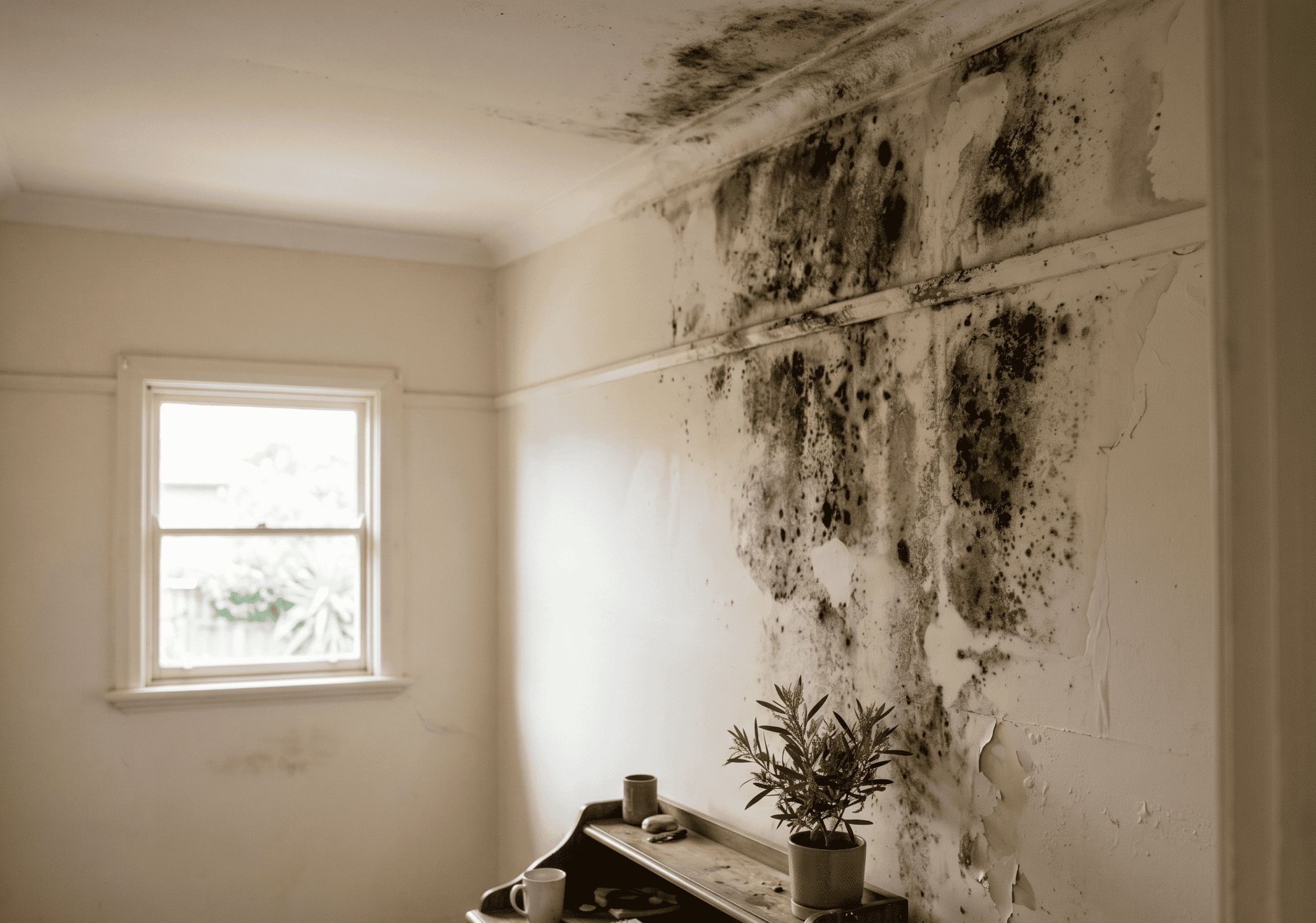
No. Discoloration and odors warrant investigation, but neither identifies a mold species or establishes how widespread contamination is. A stain could result from an earlier leak; a musty odor may signal moisture somewhere not readily visible.
Avoid describing every dark spot as “toxic black mold.” Also avoid assuring a buyer that growth is harmless without evidence. The CDC’s mold-health guidance explains that exposure can affect people differently and that moisture control matters.
The practical next step is to locate the wet area, determine whether the problem is ongoing, and seek a qualified assessment when conditions are substantial, concealed, or recurring. That gives buyers meaningful information without unnecessary speculation.
Do You Need a Professional Mold Test Before Selling?
Not always. According to the EPA’s guidance on sampling and testing, testing is generally unnecessary when mold growth is already visible. The priority is identifying the moisture source and removing the affected material appropriately.
EPA has not established federal numerical limits for acceptable indoor mold or mold-spore concentrations. A laboratory result therefore cannot certify that a property satisfies a universal federal mold standard.
Testing may still have a role when the source is unclear, hidden contamination is suspected, a dispute requires evidence, or a qualified professional recommends a specific sampling plan. Ask what decision the test will inform before paying for it.
For an inspection, request clear photographs, identified locations, any limitations, and a written explanation distinguishing confirmed findings from suspicions. Repeated tests without a defined purpose rarely improve the seller’s decision.
Can You Clean Up Mold Yourself Before Listing?
Sometimes. EPA mold-cleanup guidance explains that homeowners can often handle limited growth covering less than approximately 10 square feet, if the circumstances are appropriate. That number is guidance, not a legal definition of safe contamination.
Extensive growth, sewage contamination, suspected hidden mold, or substantial water damage calls for extra caution and potentially professional remediation. People with health vulnerabilities should avoid exposure and seek appropriate medical advice.
Never cover mold with paint and call the problem fixed. Clean or remove affected materials as appropriate, dry the area, and correct the leak, condensation, or drainage condition that allowed growth. Wet porous materials may need replacement.
If you perform limited cleanup, keep photographs and records. Describe the work accurately rather than promising that no mold remains anywhere in the house.
What Does Professional Mold Remediation Include?
The scope depends on the size and cause of the problem. Professional work may include isolating affected areas, safely removing unsalvageable materials, cleaning suitable surfaces, managing moisture, and drying accessible structural components. Restoration of floors, drywall, or cabinets may be a separate contract.
Before authorizing work, request a proposal specifying the affected rooms, containment approach, disposal, cleaning, moisture correction, exclusions, and completion documentation. Find out who is responsible if an active plumbing or drainage problem is discovered mid-project.
The cheapest proposal may omit reconstruction or the source repair. Compare equivalent scopes rather than judging on the total alone.
What Records and Post-Remediation Verification Help a Buyer?
Keep inspection reports, photographs, moisture readings where available, invoices, material-replacement records, and details of the corrected water source. These can help a prospective purchaser understand what happened and what was completed.
Some buyers request post-remediation verification. Ask whether the contractor provides completion records and whether an independent follow-up evaluation would be useful. EPA notes that appropriately designed surface sampling may sometimes help assess cleaning, but no test establishes compliance with a universal federal mold limit.
Documentation describes observed conditions at a particular time; it does not guarantee mold can never return or that the building is permanently “mold-free.”
How Much Could Mold Remediation Cost in Mauldin?
There is no defensible universal price for a mold-affected Mauldin home. Removing growth from a small, accessible bathroom surface is very different from correcting chronic crawlspace moisture, replacing insulation, and rebuilding damaged flooring.
Obtain written estimates separating investigation, remediation, moisture-source repair, rebuilding, and permits. Also ask what is excluded and what might change if hidden damage appears. Insurance coverage, if any, must be evaluated independently.
Compare those costs against the likely difference between repaired and as-is sale prices. Our Greenville guide to selling a house needing major repairs covers the broader renovation calculation; here the essential question is whether mold-specific work improves your net proceeds.
Does Mold Remediation Require Permits in Mauldin, SC?
Cleaning a small surface is different from replacing load-bearing materials, altering plumbing, or rebuilding an HVAC system. Permit requirements depend on the project and the authority governing the property.
For homes inside Mauldin city limits, the City of Mauldin permit guidance requires permits for additions and alterations, as well as specified electrical, plumbing, gas, and equipment work. Confirm requirements before opening walls or authorizing regulated reconstruction.
A Mauldin mailing address does not conclusively establish municipal jurisdiction. For properties under county authority, consult Greenville County Building Safety.
Ask contractors who obtains permits, which inspections are needed, and what documentation is provided at completion. Where structural deterioration or enforcement notices are involved, our Greenville code-violations guide explains the separate compliance concerns.
Must You Disclose Mold When Selling in South Carolina?
South Carolina’s Residential Property Condition Disclosure Act requires the prescribed statement for covered residential sales. The official Property Condition Disclosure Statement includes questions relevant to mold: water intrusion, wood-destroying fungus, environmental contamination, and toxic mold.
Disclose what you actually know, using the form’s specific questions. A moisture stain isn’t automatically evidence of a particular toxic species. Conversely, don’t conceal documented growth, an unresolved leak, or known past damage merely because a room looks better after cleaning.
What If the Mold Was Remediated Previously?
Review the form in light of your knowledge of the property’s history, not only today’s appearance. Provide accurate information about applicable prior water intrusion, known conditions, and repairs. Keep invoices and evaluation records for a buyer to review.
South Carolina Code §27-50-60 addresses prompt correction when a previously delivered disclosure becomes materially inaccurate. Certain transfers are exempt from the statement requirement, but those exemptions do not authorize deliberate misrepresentation.
Selling as-is does not automatically remove applicable disclosure duties. If reports conflict or the transaction presents unusual issues, consult a South Carolina attorney rather than improvising an assurance about the home’s condition.
Will Homeowners Insurance Pay for Mold Remediation?
Possibly, depending on the source of damage and the policy. Mold following a covered sudden plumbing loss may be handled differently from growth caused by prolonged leakage, ongoing humidity, or maintenance failures. Policies may impose mold-specific limitations, exclusions, or additional coverage terms.
The South Carolina Department of Insurance’s mold guidance emphasizes moisture control and reviewing coverage. If a claim is possible, document the cause, notify the insurer, and request a written explanation of what is covered.
Don’t build your selling plan around an assumed insurance payout. If a claim remains open, coordinate any approved funds, repair duties, and mortgage-lender interests with the insurer and closing attorney. Our Taylors water-damage selling guide explains broader water-loss insurance distinctions.
Can Mold Affect the Buyer’s Mortgage or Insurance?
Yes. Extensive visible growth, continuing moisture, or related structural damage can complicate appraisal, insurance underwriting, or mortgage approval. But a small isolated stain does not automatically disqualify every property.
For FHA-insured loans, HUD’s Single Family Housing Policy Handbook provides relevant standards for property condition and hazards. The lender may request an evaluation or remediation before funding.
Ask for a specific written lender or insurer requirement rather than assuming every item in a home inspection is mandatory. An agreed credit or lower purchase price may not solve a defect that must be corrected before closing.
What If the Buyer Discovers Mold During Inspection?
A buyer may request specialist evaluation, remediation, a price change, or other contractual concessions. Whether the buyer can terminate depends on the agreement, applicable contingencies, and deadlines—not simply the discovery of a musty area.
Request the relevant findings and obtain an independent scope for expensive work. A buyer’s estimated remediation figure is not necessarily the final contractor price. Preserve any new information relevant to your future disclosures if the transaction fails.
Our Simpsonville failed-inspection guide discusses South Carolina due-diligence deadlines, termination, and earnest money in detail.
Three Ways to Sell a House With Mold in Mauldin
1. Remediate and List Traditionally
Professional remediation and documented moisture repairs may broaden buyer interest and reduce financing questions. But you pay for investigation, removal, restoration, and holding costs before the sale. Hidden damage can change the budget.
2. List the Property As-Is
An as-is listing lets buyers evaluate the known condition and price the repairs into their offers. You may avoid upfront restoration, but negotiations, inspection rights, and financing restrictions remain. For broader options, review selling without a Realtor in Upstate.
3. Request a Direct Cash Offer
A direct buyer may consider the home in its present condition, accounting for remediation, rebuilding, resale costs, and risk. That offer may be less than a successful repaired sale price. Compare the entire contract, not only the number, using GSP Investors’ selling-options comparison.
Mauldin Example: Remediate Mold or Sell As-Is?
Imagine a hypothetical Mauldin home with recurring crawlspace moisture and documented growth affecting insulation and sections of subfloor. The owner compares remediation followed by listing, a conventional as-is listing, and a direct purchase.
| Estimated item | Remediate & list | List as-is | Direct cash sale |
|---|---|---|---|
| Selling price | $315,000 | $276,000 | $240,000 |
| Remediation and restoration | $40,000 | $0 | $0 |
| Selling and closing expenses | $19,000 | $16,000 | $0* |
| Holding expenses | $6,000 | $3,000 | $1,000 |
| Evaluation and documentation | $2,000 | $2,000 | $2,000 |
| Estimated proceeds before debt payoff | $248,000 | $255,000 | $237,000 |
Hypothetical illustration, not Mauldin market averages, actual contractor quotes, or guaranteed GSP Investors offers. The direct-sale column assumes the buyer covers ordinary seller closing expenses. Debt payoff, taxes, liens, insurance proceeds, and other obligations are excluded.
Here the as-is listing produces $7,000 more than remediation and listing, despite a lower selling price. The direct sale produces $18,000 less than the as-is listing but avoids owner-managed remediation.
Real results may differ. An unexpected framing problem could increase restoration costs, while stronger buyer offers or permitted insurance proceeds might change the comparison. Use expected net proceeds and credible written terms, not only the potential repaired price.
What If You Cannot Afford Mold Remediation?
A homeowner can have considerable equity but lack cash for a major cleanup. Before financing work, obtain a realistic as-is valuation, professional estimates where justified, and serious purchase offers. Factor in interest, holding expenses, and potential hidden damage.
If an urgent safety or government requirement exists, ask what must be addressed regardless of the selling plan. A buyer willing to accept the condition doesn’t automatically remove existing legal obligations.
Selling a Vacant, Inherited, or Tenant-Occupied House With Mold
A vacant house can develop unnoticed leaks or condensation. Arrange appropriate insurance and property checks while deciding how to sell. Our vacant-house guide for Anderson discusses related costs.
For inherited property, verify who has authority to transfer title. For tenant-occupied property, applicable landlord safety and habitability obligations may continue while the house is marketed. Neither inheritance nor a pending sale automatically excuses a dangerous condition.
Checklist for Selling a House With Mold in Mauldin
- Locate moisture. Identify leaks, drainage, condensation, or another source.
- Document conditions. Keep photographs, reports, and past repair records.
- Evaluate the extent. Seek professional help for significant or hidden growth.
- Address hazards. Do not disturb extensive contamination without precautions.
- Obtain written scopes. Separate remediation from rebuilding and moisture correction.
- Check insurance. Clarify covered causes, limits, and open claims.
- Confirm permits. Determine whether city or county rules govern reconstruction.
- Review disclosures. Answer accurately and correct material changes as required.
- Compare net proceeds. Include repairs, selling expenses, and holding costs.
- Read offers carefully. Check financing, inspections, proof of funds, and closing terms.
How GSP Investors LLC Evaluates Mauldin Houses With Mold
GSP Investors LLC considers Mauldin properties with mold and moisture concerns. You can seek an evaluation before committing to major remediation.
Provide the address, known damage, moisture history, and any contractor or inspection records. The company evaluates whether a direct purchase is feasible and, if so, presents terms to compare with a repaired or as-is listing.
Any closing must still satisfy title, contractual requirements, and applicable law; a direct offer does not eliminate disclosures or guarantee a fixed closing date. Learn about GSP Investors LLC, how its buying process works, and homeowner reviews.
Frequently Asked Questions About Selling a House With Mold in Mauldin, SC
1. Can I sell my Mauldin house with mold?
Yes. A willing buyer may purchase a mold-affected home as-is. Price, financing, disclosures, and contract terms still matter.
2. Must I remediate mold before selling?
Not necessarily. Some buyers accept homes needing remediation, although safety obligations or lender conditions may require work.
3. Do I need a professional mold test before listing?
Not always. EPA generally considers testing unnecessary when mold is visible; specific circumstances may justify professional evaluation.
4. Will a cash buyer purchase a house with mold?
Some will consider it. The moisture source, affected area, repair costs, and property value influence the offer.
5. Must I disclose known mold in South Carolina?
Applicable disclosure questions address conditions including water intrusion, fungus, and environmental contamination. Selling as-is does not automatically waive those duties.
6. Does homeowners insurance cover mold remediation?
Sometimes. Coverage depends on the cause, policy terms, exclusions, and limits. Request the insurer’s decision in writing.
7. Can mold prevent mortgage approval?
Significant contamination or ongoing moisture may trigger lender-required evaluation or remediation. Requirements vary by loan program.
8. Do mold repairs require permits in Mauldin?
Some structural, plumbing, electrical, or mechanical reconstruction requires permits. Confirm the correct local jurisdiction before work.
9. Is remediation better than selling the house as-is?
Compare realistic prices after remediation, repairs, holding costs, and selling expenses. The higher sale price may not yield more money.
10. Will GSP Investors LLC consider my Mauldin house?
Yes. GSP Investors LLC considers properties with mold concerns. Purchase feasibility depends on condition and agreed terms.
Compare Your Options Before Paying for Mold Remediation
Mold doesn’t automatically require a full renovation before your Mauldin house can be sold. The useful first steps are finding the moisture source, establishing the extent of damage, and reviewing credible estimates.
Remediation may widen buyer interest. An as-is listing avoids some upfront work. A direct purchase may be useful when managing cleanup isn’t practical. Compare written offers and net proceeds—not a promised repaired price.
To discuss selling your property, request a no-obligation offer or contact GSP Investors LLC at (864) 671-1011.
This guide provides general information, not medical, environmental, insurance, legal, or financial advice. Consult qualified professionals about your property’s condition and sale.